T and I visit the museum of the Middle Ages, Musée de Cluny. We have free passage owing to our being under 26. How very nice.
The museum goes on and on, the collection impressive if only in its vastness. Utensils, tapestries, statues, and a thousand and one depictions of our lord and savior. Christianity permeates, even combat and household tools bear symbols of devotion.
T, a history enthusiast, remarks that the royal plates are unremarkable. I don’t disagree. I wonder what cultures morphed to produce the travesty I behold. Yes, yes, we were all hunters and gatherers once.
This visit reminds me of an earlier one to Versailles, once a residence of French royalty and now a popular tourist destination. The Chateau was impressive—fireworks, botanical mazes, sheer opulence. And then the Veronese painting, with the small dark-skinned boy serving a crowd.
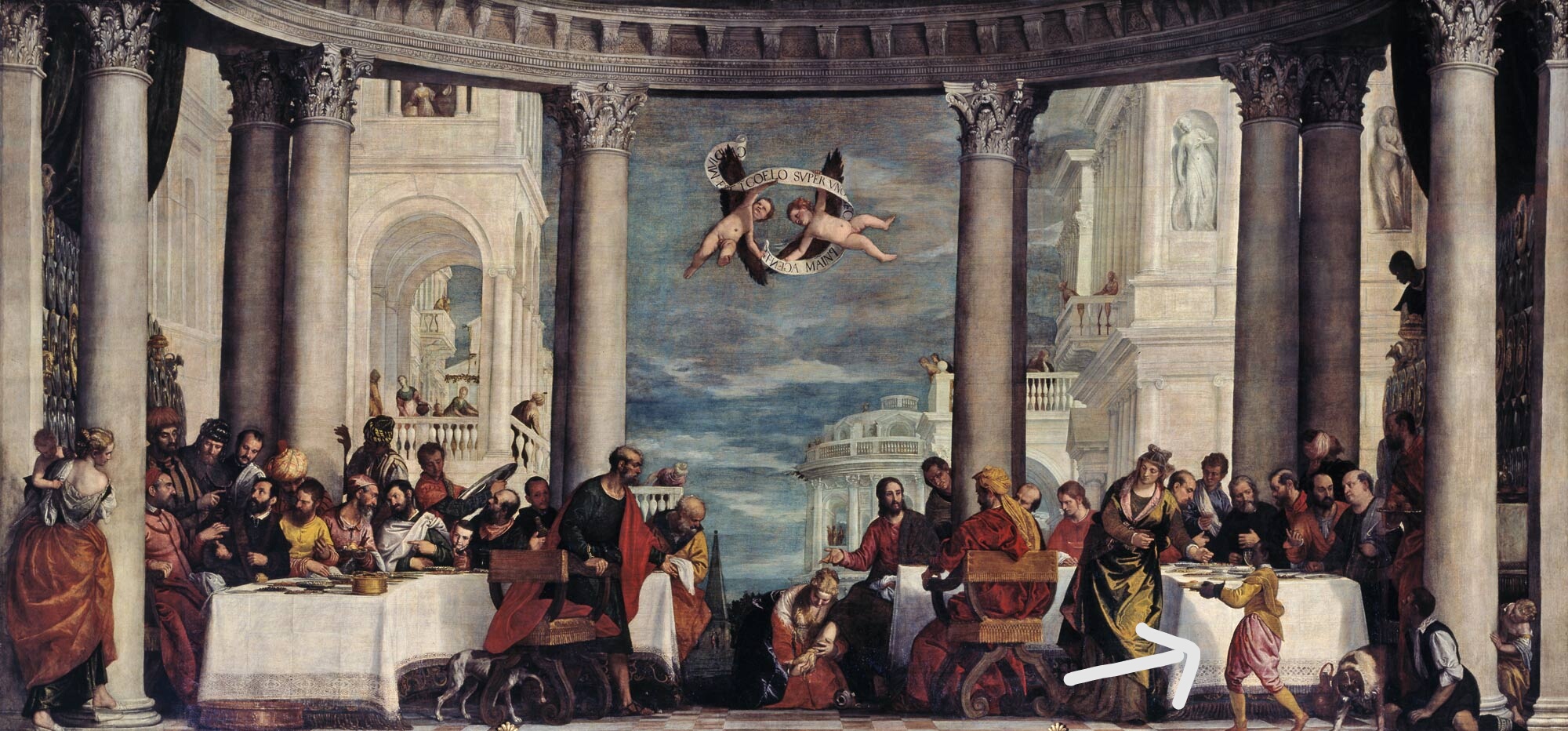
The argument has always been that art can and must be appreciated in a vacuum untainted by context. Academia demands of its subjects a learned detachment, the measure of intelligence.
Whattalaugh.
At Cluny, I liked the tapestries. The labor that must have gone into weaving those monstrous things was little to sneeze at. The acquisition (and presentation) of the entire collection was itself labor, art if you must. There was this and that other labor which invents new ways of confining me to history’s periphery.
It may very well be the prerogative of the history lover to collect all art & tell all stories with neutrality. Mine is to occasionally be careless with it, laugh at it, and pray it to oblivion.
 Agatoni