I don’t travel well. Packing undoes me. Toiletries discarded, half a closet, and a bed fully made. Beer flat on my window sill. Four years of undergrad summarised in fewer hours. I am off to Washington DC to see if doing nothing acquires freshness in a bigger city.
Predictably, I don’t finish packing. Z picks up my slack while I dash for the fire exit and hop into a GoGreen cab, which, predictably, smells like the client before me was Bob Marley on his way to a soirée at Snoop’s.
The taxi driver, a proud Bostonian of Irish and Quebecois origin, tries to lure me into conversation, insisting on his non-imperialist ancestry and offers as proof, his great-grandfather without whom the Second World War would perhaps maybe not have been won after all. I refuse bait and try for sleep but the Bostonian insists on making his over-caffeination my problem.
I learn that the Bostonian fled his city’s expenses — “fucking parking man”. Inquiring after my origins, he beams back knowledge of Hotel Rwanda. I have neither the will nor the conviction to state that the film strays from fact. It is good enough to be misimagined.
Passing Springfield, the Bostonian becomes a tour guide, telling of the town’s history of manufacturing firearms, inventing basketball, and so on. Springfield, for all its importance, is unpretty. One senses instinctively that the city’s ecosystem of bridge, concrete and modern life effluvia will be encountered elsewhere, each time more forgettable than the last.
⚜️
At Dulles, M’med from Kabul steers me to my destination. His avuncular disposition invites chatter: He reports that old houses, once worth 20 to 100 thousand dollars, and home to many African Americans, are continuously bought and turned into condominiums. “A unit could set you back four thousand dollars!” His wistfulness betrays incredulity and censure but also a longing to be one of those homeowners bought out for the price of early retirement in Florida.
⚜️
Down the corner of the Hill and the Northeast Corridor where I lodge, Maryland Avenue stitches two worlds: one of the brightly-colored row houses and another where black men hurdle under one tree sharing one smoke in an endless drizzle. This juxtaposition of progress and gentrification recurs across America’s capital (and elsewhere) but on this street, the color gradient falls so steeply that crossing the border (as M & I often did to scavenge for cheap-ish groceries) induces whiplash, a sense that a moral truth had been hurtling towards me but I had turned too slowly to grasp it.
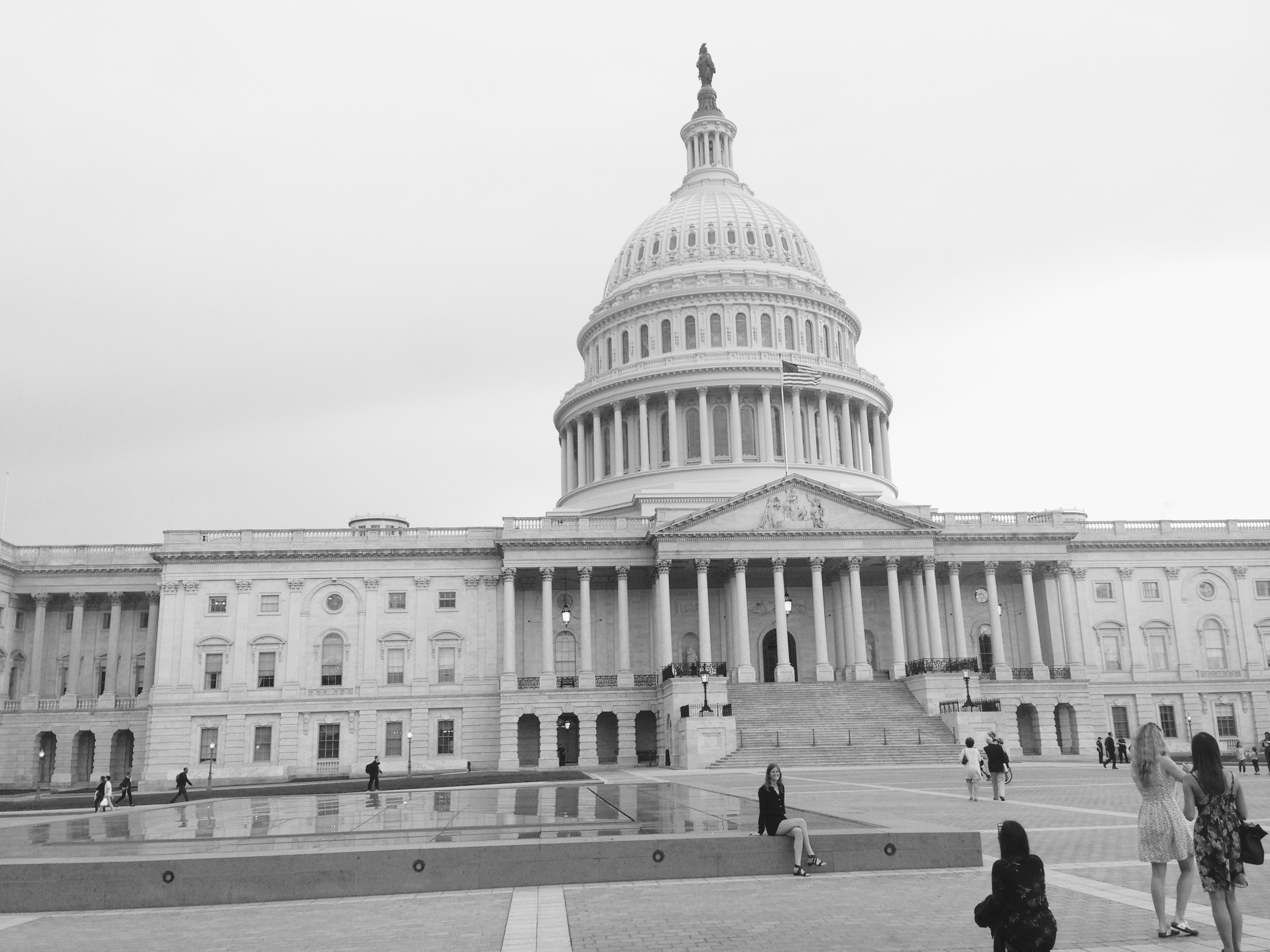
One sunny-turned-rainy day, M and I make our way to the busier parts of town, stopping by the Capitol which impresses in its neoclassical adornment—an architecture nostalgic of “the purity of the arts of Rome”. More than the monuments, the languages swirling about fascinate. America seems always nostalgic for itself—for greatness, for classical antiquity, for non-imperialist great-grandfathers, for the glory of war,—and this nostalgia finds its strongest alibi in visitors who flood here like acolytes of faith kept alive long after its prophets are gone.
⚜️
I’ve heard it said that to travel well is to seek in your setting those qualities found there and not elsewhere. But at each turn, I got the false memory of having been to DC prior. The park, the café, and the tarmacked path that bridged them were all familiar. The city seemed a pastiche of other cities— New York, Philadelphia, Paris.
Was it Cole or Calvino who spoke of continuous cities?
Perhaps cities are permutations of very few distinct features. The nuance between places of geographical, architectural, or social proximity is discerned only through concentrated effort. At a glimpse, Springfield is also Syracuse, Northampton is also Amherst, and on it goes.
⚜️
As tends to happen with monuments, the White House appears smaller and less invulnerable than imagined. Across from the presidential office, a Rastafari of Habesha heritage sits in protest. He commutes from Virginia to remind passersby of Tibet, and Ethiopia, and Palestine and everywhere else that hurts.
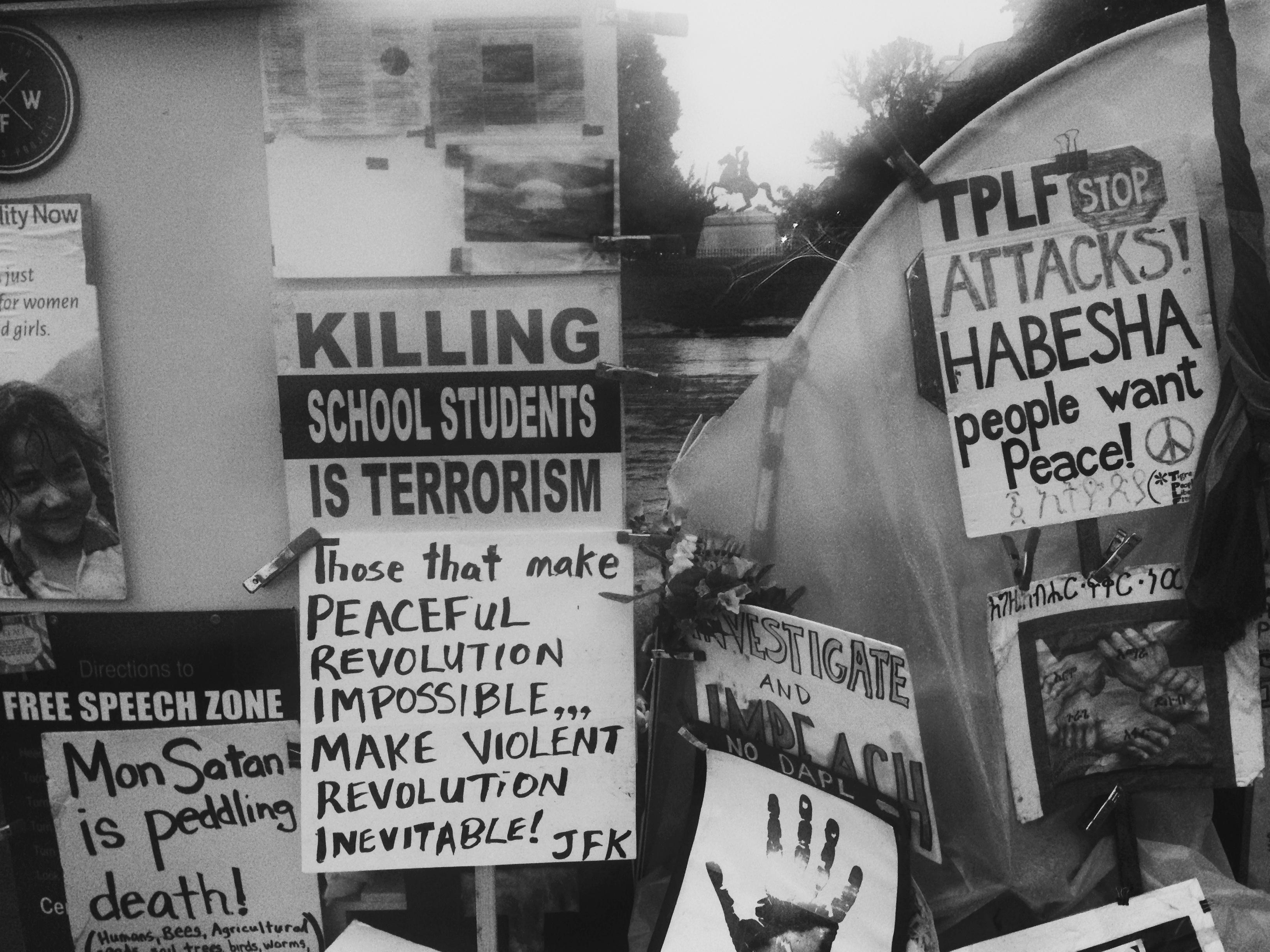
He likes this city in the same way M’med does: for both, the dream is to go home to a version of brightly-colored row houses. For some, the promised land is yet promised.
 Agatoni