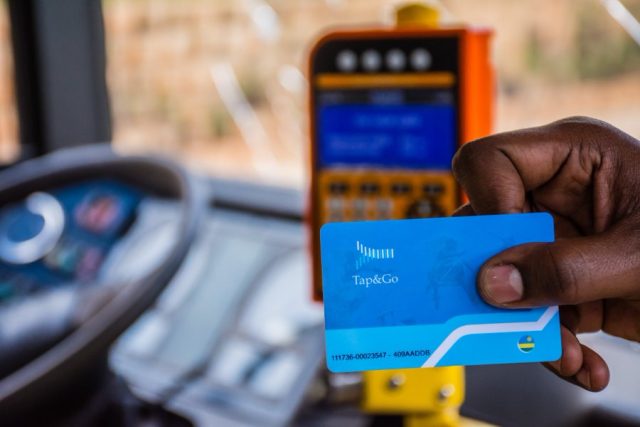
Kigali is changed but not as unrecognizable as friends said it would be. Motos are still motos though buses take Tap&Go cards now. No more haggling fares with conductors, though haggling goes for everything else.
The Haggle Is Real
It used to feel that there was a global haggling ratio—the amount by which sellers inflated prices—and that ratio was roughly one-third. Now, it is not uncommon to purchase things for less than half their stated price. Haggling, they say, is an art that offers choice. There is the possibility of both parties walking away with a sense of triumph. I respect the hustle but yearn for a better quality of (mis)information.
Competing shops tend to be adjacent here. There’ll be an entire block of individually-owned businesses offering the same product for more-or-less the same price (forex bureaus near that mosque in town, auto-écoles in Muhima, etc.). On the other end of the spectrum, the price of comparable goods in adjacent shops can vary by as much as one hundred percent. On occasion, this price variance sets me on a hunt for bargains, but victory, when gained, is short-lived. Bargaining can breed chronic dissatisfaction, the sense that there was better around the corner if only you’d waited.
Sister Outsider
It has rained nearly every afternoon. A recurring complaint is that rain is wasted on cities while farmlands wither in perpetual summer. I’ve heard this said so often, it rings at all times true and untrue. If it is human nature to lament, in Rwanda it is sport. The trivial and the tragic, the true, and the well-repeated get enmeshed, distorted, and passed on.
A few lunches ago, plates of cassava pap and silver cyprinid between us, T spoke of how months ago the president decreed that all thieves be shot on sight. Surely this was an exaggeration, I thought, but there he was in his conviction, and there I was grunting, “but, the law!”
Now and then, I’ll catch myself suggesting that someone go to the police or get a lawyer when inconvenienced. In response, I am looked upon with pity as though I were an outsider or a child unaccustomed to the ways of the world. The people I interact with are not opposed to the justice system. They just don’t believe it is for them. We look at the same country and see different hopes and fears.
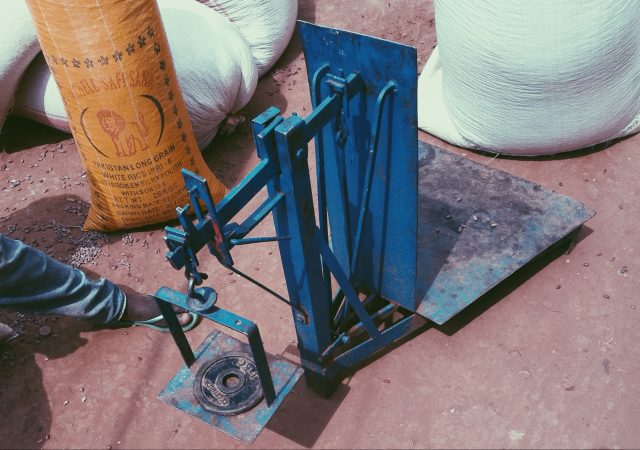
Days ago I took crops to market. Haggling was central to the exchange. After prices were established, we waged war over the scale. Was a kilo of beans really equivalent to a kilo of rice and a kilo of maize? The retailer staked his integrity on his faith, “I am a Christian, I wouldn’t lie to you,” although this didn’t bar him from peppering our exchange with a rape joke or two.
I suppose it is no contradiction that Rwanda should have significant political representation of women and still be a place where gender hierarchies persist. But there are moments that catch me off-guard, forcing me to admit to carrying hyper-saturated notions of home.
Social Hierarchies
There are things I had glossed over…like how keenly hierarchical Rwandan society is. Wealth, age, gender, education, and degree of foreignness tend to dictate the quality of one’s interactions.
At the Rwandan Nationals’ line at the Kigali International Airport, a white boy attempts to jump the queue. His being foreign in Kigali must have granted him an excess of privilege or he wouldn’t move with so much knowingness.
In a pickup truck with day laborers, I am prohibited from climbing onto the back. The foreman yields the front seat for me, as I would be expected to yield it to my ‘superior’ and her to hers.
On my first visit to Brioche, a Drunk Guy nursing his hair-of-the-dog Heineken disrupts my attention, attempting to look at my screen, talk to me, touch my things. Somewhere between denial and anger, I threaten, “If you talk to me again, I’ll call the police.” He retreats but starts yelling at the café servers who are powerless to his threats because, assumed wealthy, he outranks them on the social hierarchy. In an alternate universe, they might have refused him service but in the present one, the risk of offending outweighs the merits of enforcing decorum.
What’s In A Double Espresso?
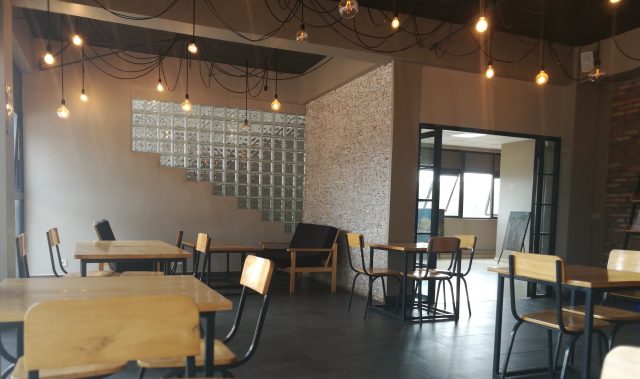
Although I have no real intention of quitting Brioche (the Wi-Fi is decent and the service near-exceptional), I complain to anyone who’ll listen about the price-prohibitive nature of cafés. A double espresso at Brioche is 500 FRW more costly than Bourbon’s (a local competitor) and costs the same as one kilogram of beef; two and a half loaves of bread; three liters of milk; ten kilograms of cassava flour; or twenty-five avocados.
C, who works at Brioche, says it’s no bother that he can’t afford to frequent the café. He is happy enough to work there. The pay is good. The same matter-of-factness is adopted by Rwandan farmers who grow coffee but rarely drink it. As with teff in Ethiopia and quinoa in Bolivia, global demand inflates produce prices making them more lucrative to export than consume.
I’d idealized coffee shops as democratic spaces where a country might see itself reflected but perhaps there is no strong basis for that ideal. Coffee is a luxury even in these thousand, coffee-fertile hills.
 Agatoni
Hey, thanks for reading.
Send me your email.
LikeLike
This is amazing!
Hi How can we get in touch?
LikeLike