Someone asked me why I don’t write about love. Because of who was asking, I demurred. The realm of care, of mining the self to nurture the other, remains, if in perception alone, gendered. I resented the expectation—why should I write about love?—even though, and especially because, love threads all my writing. In writing, I seek connection, with myself, sometimes with you. As Zadie Smith writes, this attempt to ask, “I feel this—do you? I’m struck by this thought—are you?…is almost always intimate.”
Of course, love is multifaceted. One face of love is communal care, is friendship, is family. Mia Birdsong, a “pathfinder, community curator, and storyteller” explores this face of love in her book, How We Show Up: Reclaiming Family, Friendship, and Community (2020). The book travels both horizontally, with many topics covered (the trap of the American Dream, family beyond biological and legal ties, the power of gathering especially for the marginalized, accountability, and so on) as well as vertically, into Birdsong’s various relations.
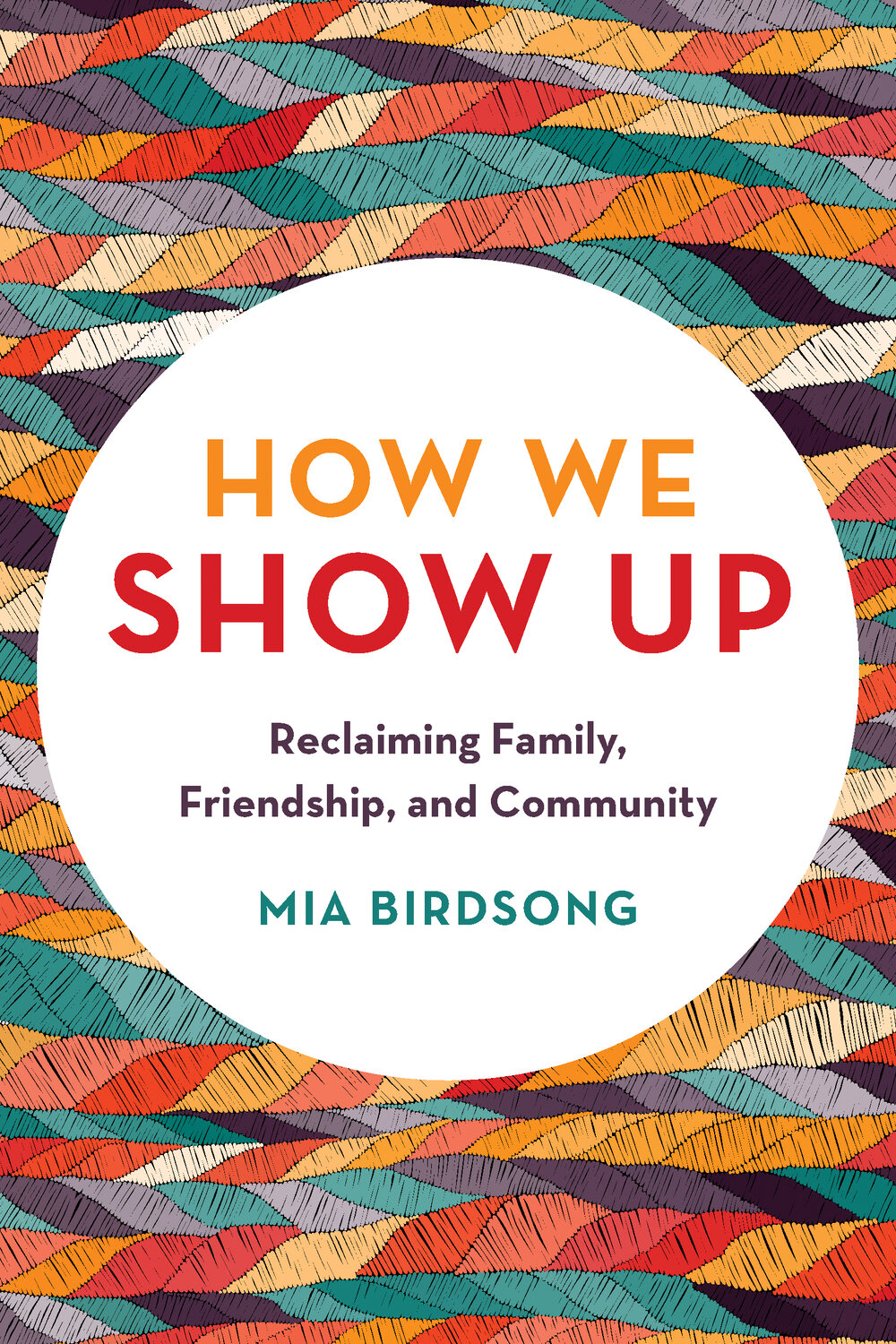
What I liked most in How We Show Up was the coherent threading of seemingly disparate topics (self-care, boundaries, individuality, prison reform, accountability, capitalism, friendship, queerness, and more). “These wounds—the specifically personal and the systematically personal—are intertwined.” I liked the acknowledgment of the hardship and necessity of community (sources I’ve encountered center one at the expense of the other). I liked that Birdsong models alternative forms of kinship, which will be familiar to some but preposterous to others. But perhaps the real gift of How We Show Up is simply in showing that different is possible. You can make your own adventure.
You might enjoy this book if you are vaguely curious about community and relational care. You might find it overly faithful to its American context but if the last few hundred years are anything to go by, the things driving us to re-imagine better, are awfully translatable.
If you read this, consider wandering into the book’s very generous bibliography. And into these similar-ish resources (two books & a webpage):
by bell hooks
by Priya Parker

 Agatoni