I must go back briefly to a place I have loved
to tell you those you will efface I have loved.
– Agha Shahid Ali
In high school, a German teacher regaling my classroom of two-dozen with stories of his recent trip to Tanzania spoke of what he considered the disingenuity of being called, “Rafiki! Rafiki!” by strangers to whom he was more customer than friend. A decade later, I am sympathetic to his view of things—the world is full of corporations eager to appropriate the language of family and kinship in service of exploitation. But at the time, my teacher’s words provoked a sense of injury and a desire to defend Tanzanianness itself and the feeling of friendship I have known and loved there.
Lately when I visit Tanzania, my days are unremarkable. It rains too much in December and the dust is criminal in June. In throes of boredom, I warn away friends who think to visit. I see little to do here after the lake and musical concerts have been exhausted. My city is transforming into the sort of place where a certain class gathers around a shopping mall and a certain other class aspires to that kind of gathering. Our shopping mall is a 3 or 4 or 5-year-old wound of a building that offends the spirit. This is progress I’m told, for which I am meant to be grateful. Did I mention the dust in June? The heat in August?
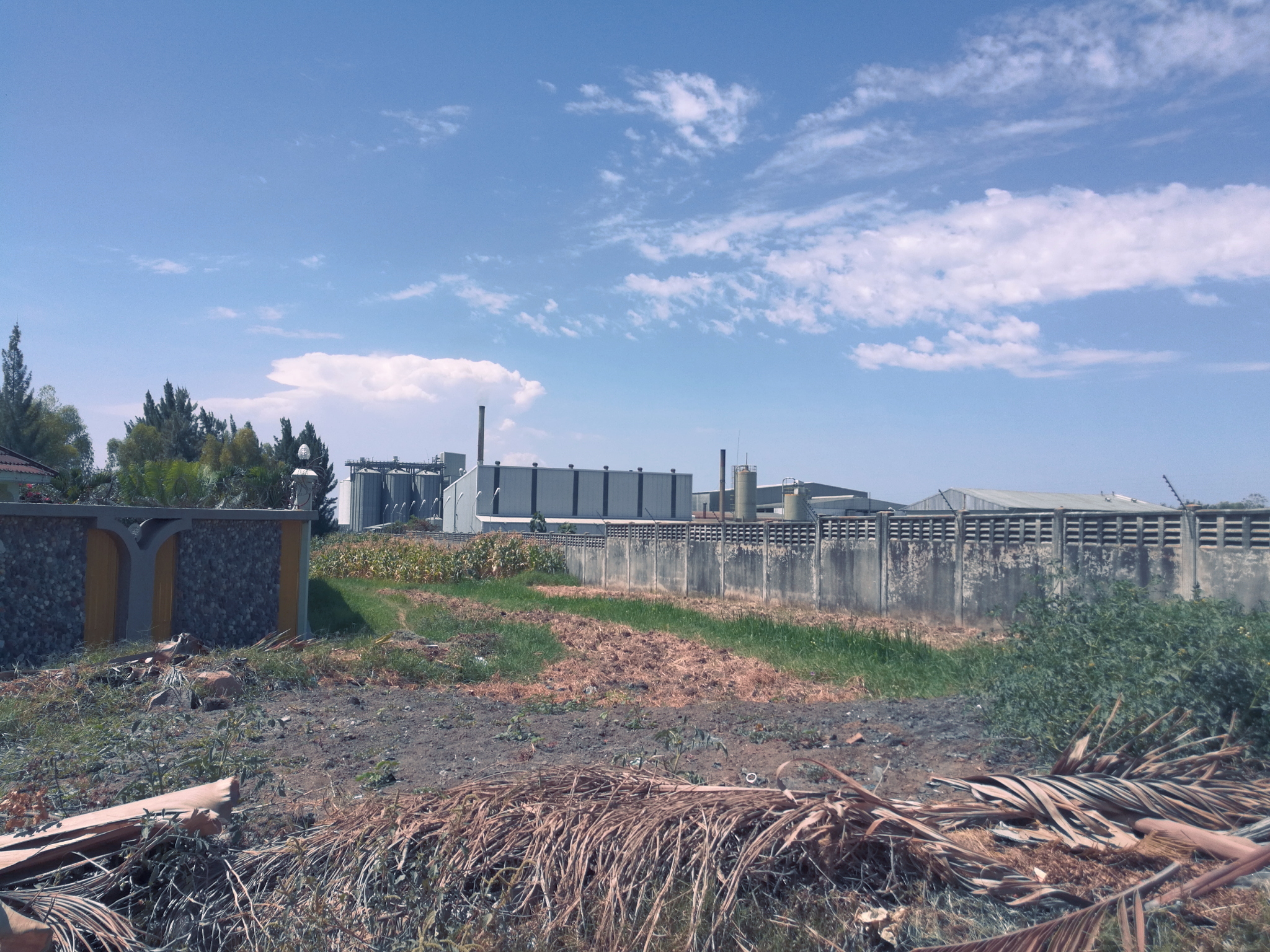
And yet, if such a thing can be asserted, no place is more vital to my sense of being. I have tried to unravel the individual elements that weave together into the gossamer strings that hold me up in the world but language and my own feeling are imprecise. Perhaps it is that my trips to Mwanza offer a reprieve from the aggressive impersonality of modern life. Though I have never particularly aspired to knowing or, God forbid, loving my neighbor, I have aged into a tentative appreciation for the virtues of a certain kind of provincialism. In the Tanzania I’ve inhabited, neighbors whose names and faces I cannot recall exchange their produce after harvest. Sweet potatoes, maize, and mangoes arrive at our doorstep. When it is our turn, my mother and I lay out the 100%-whole-fat avocados we grow in our compound and ready them for distribution among our neighbors. There are never enough avocados (or pawpaws) and so we argue and negotiate who should get one or two or three. Who has been the most neighborly lately? How many mouths are there to feed? Who loves avocados best? Over the course of the week, we make our offerings. For you, my sweetness. For you, the fruit of my enduring labor.
Ma planted that avocado tree years ago. It did not bear fruit for almost ten years. And when she was finally ready to call it in, the first fruit came and it has every year since. There is an allegory here somewhere about waiting and fulfilment.
In Tanzania, I am always waiting. For the rain to come. For the rain to go. For the electricity to return. Sometimes when I walk to Ali’s shop past the field with the overgrown grass (where my brother used to play) I find the shop closed and Ali at the mosque for evening prayer. So I wait and a line forms behind me. Breezy conversation fills the minutes before Ali reappears. At Ma Zai’s, I wait in line for the unmatched chapatis she wakes up at 4 am to knead. I don’t know how to wait. I’ve been too impatient to learn. Like Geoff Dyer, “I am temperamentally incapable of waiting…I’ve spent too much of my life waiting and I can’t wait another second for anything.” My irritation at all the “tomorrow”s that really mean “some day from today” cannot be overstated. Each time I visit I am forced to re-acquire my fluency with a pace so unlike my own. In this way, time resembles language, and perhaps to exist in many accents and dialects of time is to be king.
The upside of all of this waiting is a kind of spiritual availability. The knowledge that the world, source of grief though it may be, is ready to come to one’s aid, ready to witness one’s suffering and joy. What I call knowledge might only be unproven sentiment. This is not nothing. Countries are, like everything else, a constellation of ideas, some real and others aspirational. Just like we probably cannot dream of a truly new face (the faces we dream of are thought to be vestiges of our waking lives), we cannot dream of a country that is not already somewhere happening, already somewhere true.
In the so-called “real world” where me and my friends live, our days are composed of time blocks and punctuated by arbitrary deadlines. There is always somewhere to be and we are already running late. We are exhausted, have been since we started slogging in schools and eventually in the workplace for the promise of earning back our time. We have decided, with varying degrees of agency, that this is the way to be. That the cost of swimming upstream is simply too high.
⚜️
When I went to my sister’s former secondary school near Bugando, I was denied entry for ‘indecent dress’. My loose-fitting Champion joggers were simply much too contrary to the country’s culture and ethics. A woman, witness to my indignation, offered me a scarf to wrap around my waist so I could gain entry but ever the cut-nose-spite-face sort, I declined and chose instead to yell at the security guard because you cannot yell at institutions. Two years later, a Tanzanian MP, Condenster Sichalwe would be kicked out of parliament for wearing “tight-fitting pants”. The danger of leaving is that one is always coming back to a foreign country. The country I came back to polices how women dress, dance, and love. No public twerking and fuck the gays.
I like the word “orientation”. It makes me think of a trapeze dancer distorted into some glorious angle which makes me think of “trapezium”, an easy and well-mannered word. Say it: tra-p-zeee-yum! I think also of the story of the blind men who, having only partial view of an elephant, attempt to describe it through touch:
A group of blind men heard that a strange animal, called an elephant, had been brought to the town, but none of them were aware of its shape and form. Out of curiosity, they said: “We must inspect and know it by touch, of which we are capable”. So, they sought it out, and when they found it they groped about it. The first person, whose hand landed on the trunk, said, “This being is like a thick snake”. For another one whose hand reached its ear, it seemed like a kind of fan. As for another person, whose hand was upon its leg, said, the elephant is a pillar like a tree-trunk. The blind man who placed his hand upon its side said the elephant, “is a wall”. Another who felt its tail, described it as a rope. The last felt its tusk, stating the elephant is that which is hard, smooth and like a spear.
In some tellings, the unsighted men suspect each other of acting in bad faith and conflict ensues. Imagine a world in which orientation (of any sort) is simply positionality, is simply another of God’s jokes, a unifying mystery: Just like you, I do not know how I came to be standing here. This is what I see. This is what I am touching. What do you see? What are you touching?
I can understand the fear of endless relativism: individuals and countries feel that they cannot permit all without losing their essential character. It is a question of the river (“No man ever steps in the same river twice. For it is not the same river and he is not the same man”) and the boat (If you replace, over time, the pieces of wood on a boat, does it remain the same boat?) If we are lucky, we get to live in the same country as our neighbors. We get to hold the same ideals, praise the same gods and curse the same enemies. Odds are though that our boats will keep changing: the more avant-garde among us might believe that even if you were to grind the planks of wood into sawdust, the essence of the boat would be preserved. The rest of us negotiate which planks are essential and which planks are not purely on the basis of feeling.
I have admiration and occasionally envy for the dissenters among us: those who refuse, those who protest, those who, likely out of necessity, scream, This land is my land too. Activists, as in those who act. I am afraid “I’m not really a revolutionary, I’m more of a dandy.” My approach to changing the world mirrors my approach to Jenga: I lean in with great intent, will myself to slow down and be present in the moment but then charge in with too overwhelming a desire for a future in which everything is already balanced. I fumble the ball, vow never to play again, and stand in the corner thinking, “This was supposed to be fun.”
I don’t doubt that in some ways I have already been rendered extinct. That the sun is setting on idealism. That perhaps when next I am in my city, there will be more skyscrapers, more beaches where I’ll have to pay for access (which seems criminal in a port city), more people selling something, anything…perhaps we will have evolved into the sort of place where I’ll feel self-conscious asking a stranger for the time…I may not find the mosque, Ali, or Ma Zai…may no longer trust a stranger’s offer to help with a box I am carrying…the Kirumba market may be razed down or moved…I may never in my lifetime drum up the kind of belief and imagination it takes to grow a ten-year-old tree (that relationship to time seems impossible and alien to me…and as a landless millennial, where exactly am I growing said tree?) But, for you, my portraits of what was once possible. For you, the fruit of my enduring longing.
⚜️⚜️
 Agatoni